Has your dentist told you that you might need a front tooth root canal? We understand if you’re feeling a little unnerved. It’s natural to have questions before a dental procedure, but don’t be nervous. We are here to put your mind at ease.
The word root canal can inspire fear in anyone, but we are here to tell you that it doesn’t have to be scary. With
41,000 root canals performed every day in the U.S., this common procedure is nothing to worry about.
In this article, we will answer your most common questions about the front tooth root canal and put your mind at ease. By the time you’re done reading this article, you’ll have nothing to fear and you’ll be ready for your appointment.
Front Tooth Root Canal: Know Before You Go
If you’re curious as to what a front tooth root canal is or how to prepare for the procedure, then read on. We’ve got the answers to all of your questions. Let’s get started!
1. What is a Front Tooth Root Canal?
A root canal is a procedure for preserving an infected tooth. It’s important to understand that a root canal isn’t so saving the tooth but preserving it. This is comparable to the mummification process. You’re not bringing life back into the tooth, but instead preserving its structure.
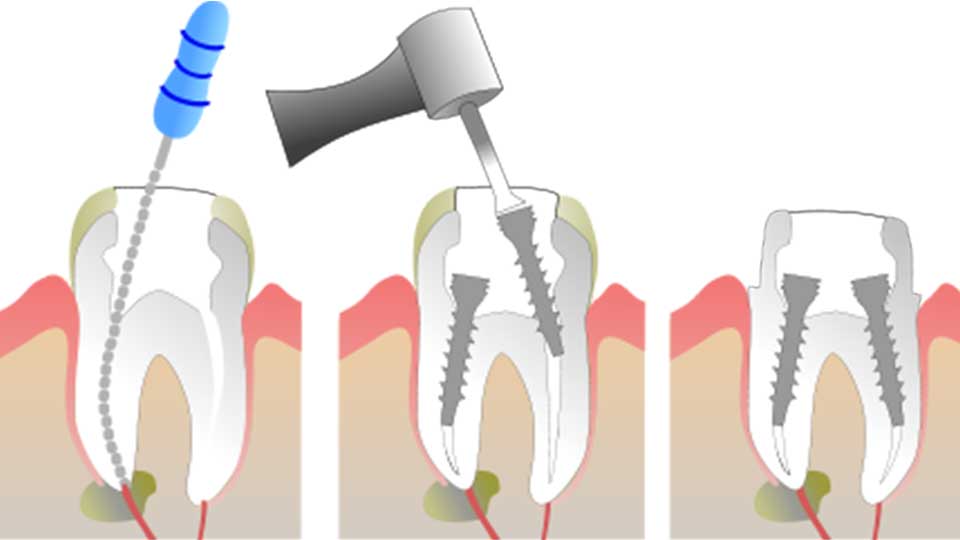
The root canal procedure consists of drilling into the root canal, cleaning out the tooth’s pulp, cleaning the canal, sealing it, and topping the tooth with a crown.
Let’s quickly define some terms before we move on any further. The word ‘root canal’ refers to the channel within the tooth where the nerve lies. The ‘pulp’ is the soft area inside the root canal.
After a tooth has pushed through the gums, the nerve has virtually no purpose to us, only letting us feel the sensation of hot and cold. Removing the nerve via a root canal does not affect the functionality of the tooth in our day to day lives.
When a person needs a root canal, there is often a very serious infection within the tooth, nerve, or blood supply to the tooth. The dentist, or endodontist, will need to remove all visible signs of infection within the tooth to avoid further damage that could lead to further health problems.
The benefit of having a root canal is that you can keep your tooth and avoid having an implant. It is both an efficient and cost-effective solution.
A front tooth root canal simply refers to a root canal performed on a front tooth rather than a back tooth like a molar.
2. Is it Safe?
Absolutely. Root canals are common procedures, are
well-established and prove to be very efficient. The average endodontist performs 25 root canals a week, so rest assured, they know what they’re doing.
Despite any
myths you have heard, root canals are safe, painless, and a low-cost solution when compared to other methods of dealing with an infected or dying tooth.
3. Will It Hurt?
The
pain you feel is from the infection within the tooth. The beauty of a root canal is that when it’s all over, you won’t have any more pain.
A root canal is usually carried out with local anesthesia so you won’t feel a thing during the procedure. When the anesthesia wears off, it’s common to have some soreness but this can be offset with over-the-counter painkillers.
Most people report that the hardest part of a root canal procedure is keeping your mouth open for the entire appointment.
4. What the Procedure Consist of?
A root canal is a complex procedure carried out over two or three appointments. Let’s explore the major steps of a front tooth root canal
Prep. First, your dentist or endodontist will take X-rays of your tooth to identify the shape of the tooth and analyze the spread of the infection. Your dentist will apply deep, local anesthesia to the site, ensuring you won’t feel any pain.
Next, your doctor will lay a dental dam, a thin film of plastic, over your teeth exposing only the damaged one. Then he/she will drill an access hole.
Remove the Pulp. The soft tissue within the tooth’s root canal is carefully removed to avoid the buildup of bacteria and infection within the chamber. Because this chamber is eventually sealed, it is important that the doctor removes all tissue at this stage.
Cleaning. Once the pulp is gone, your dentist or endodontist will clean the chamber to avoid an abscess forming. The site is thoroughly washed with water or sodium hypochlorite to flush away bacteria and/or any remaining particles. If there is a severe infection, the doctor may insert medication at this stage.
Sealing. Now that the root canal is free of infection and cleaned, your doctor will seal the canal to avoid any bacteria from re-entering the site.
Filling. Often occurring during the second appointment, the dentist or endodontist will use paste to fill the access hole made during the initial procedure.
Crown. In the event the tooth has structural damage, your doctor may recommend a crown as part of our comprehensive
dental restorations services to protect and strengthen the treated tooth.
5. What To Do Before the Procedure?
It is important that you follow your doctor’s specific instructions before your procedure. Unless you are getting IV sedation, it is likely he/she will want you to eat and medicate normally prior to the root canal.
6. What to do Post-Procedure?
You will most likely experience some tenderness when biting on that area as well as some soreness and discomfort from keeping your jaw open during the procedure.
This is all common. Taking over-the-counter painkillers or prescription medication given by your doctor can provide alleviation.
Be sure to follow your doctor’s after-care instructions carefully to avoid any issues. If you experience any extreme pain or pressure continuing after a few days, you should call your doctor, as it could be serious.
Front Tooth vs. Back Tooth Root Canals: Key Differences
While the basic root canal procedure remains the same regardless of tooth location, there are important distinctions when treating front teeth versus back teeth.
Aesthetic Considerations: Front tooth root canals often require special attention to aesthetics, as these teeth are visible when you smile. Our
cosmetic dentistry expertise ensures your treated front tooth maintains a natural, beautiful appearance. The access hole is typically made from the back of the tooth to preserve the front surface.
Root Structure: Front teeth usually have a single root and canal, making the procedure somewhat more straightforward than back teeth, which often have multiple roots and canals. This can result in shorter treatment times for front teeth.
Crown Considerations: While back teeth almost always require crowns after root canal treatment due to chewing forces, front teeth may sometimes be successfully restored with just a filling if sufficient tooth structure remains.
Recovery Differences: Front teeth typically experience less post-procedure discomfort since they endure less biting pressure than molars. However, patients may be more conscious of any temporary sensitivity since these teeth are more noticeable.
When you choose our
dental services in Birmingham, AL, our experienced team considers all these factors to provide the most appropriate treatment for your specific situation.
Ready to Make Your Appointment?
Hopefully, by this point, you are more confident about your front tooth root canal procedure and are ready to make your appointment. When getting a root canal, it is imperative you find an experienced dentist or endodontist that will satisfy your needs.
For the best cosmetic and general dental care in Birmingham, choose Doug Lewis Dentistry.
Contact us today and make an appointment.
Frequently Asked Questions About Front Tooth Root Canals
How long does a front tooth root canal take?
A front tooth root canal typically takes 60-90 minutes per appointment. Since front teeth usually have only one root canal, the procedure may be completed in one visit, though some cases require two appointments. The simpler anatomy of front teeth often makes treatment faster than back teeth.
Will my front tooth look different after a root canal?
With modern techniques, your front tooth should look virtually identical to its original appearance. We take special care to preserve the front surface and use tooth-colored materials for any restorations. In rare cases, slight discoloration may occur over time, which can be addressed with whitening or cosmetic treatments.
How long do root canals last?
Root canals can last a lifetime with proper care. Studies show success rates of 85-97% after 8-10 years. The key to longevity is following good oral hygiene practices, avoiding hard foods that could crack the tooth, and maintaining regular dental checkups.
Can I drive myself home after the procedure?
Yes, if you received only local anesthesia, you can drive yourself home. The numbness will wear off within 2-4 hours. However, if you received sedation, you’ll need someone to drive you home and should avoid operating machinery until the effects completely wear off.
When can I eat normally again?
You can eat soft foods once the numbness wears off, but avoid chewing on the treated tooth until your permanent restoration is placed. If you received a temporary filling, be extra gentle. Most patients can return to normal eating within 24-48 hours, though you should avoid very hard or sticky foods for a few days.